
+86-18668977520
+86-18668977520

Views: 0 Author: Site Editor Publish Time: 2025-09-11 Origin: Site


Have you ever wondered what boron tribromide is used for in various industries? This powerful chemical compound plays a crucial role in fields like organic synthesis, pharmaceuticals, and semiconductors. Understanding its diverse applications is essential for professionals in these sectors. In this post, you'll learn about the chemical properties, industrial uses, and safety considerations of boron tribromide.
Boron tribromide, often referred to by its formula BBr₃, is a colorless to amber liquid. It consists of one boron atom bonded to three bromine atoms, forming a trigonal planar structure. This configuration is typical for boron halides and contributes to its strong Lewis acidity. The chemical formula, BBr₃, reflects the combination of boron and bromine atoms, while its CAS number, 10294-33-4, uniquely identifies this compound in chemical databases. Sometimes called tribromoborane or boron bromide, it is important not to confuse it with boron tribromide sigma, which refers to the bonding type within the molecule.
Boron tribromide is highly reactive, especially toward water and alcohols, where it decomposes violently. This reactivity stems from the strong electrophilic nature of the boron center, which readily accepts electron pairs. When exposed to moisture, it hydrolyzes, producing hydrobromic acid and boric acid. The compound’s ability to form complexes with oxygen-containing compounds makes it valuable in organic synthesis, particularly for the cleavage of ethers. Its reactivity also extends to metals and organic substrates, often acting as a catalyst or reagent in various chemical reactions. For example, in the presence of ethers, boron tribromide forms an adduct that facilitates dealkylation.
The physical properties of boron tribromide are notable for its density and phase at room temperature. It has a density of approximately 2.643 g/cm³, making it denser than water. Its melting point is around −46.3 °C, and it boils at 91.3 °C, which means it is a liquid under standard conditions. The compound has a sharp, irritating odor and is soluble in non-polar solvents such as dichloromethane (CH₂Cl₂) and carbon tetrachloride (CCl₄). However, it reacts violently with water, so it must be handled in anhydrous conditions. Boron tribromide solution is often used in laboratories to ensure controlled reactivity.
| Property | Value |
|---|---|
| Chemical Formula | BBr₃ |
| CAS Number | 10294-33-4 |
| Density | 2.643 g/cm³ |
| Melting Point | −46.3 °C |
| Boiling Point | 91.3 °C |
| Appearance | Colorless to amber |
| Odor | Sharp, irritating |
| Solubility | Soluble in CH₂Cl₂, CCl₄ |
The compound’s high density and volatility require careful storage and handling to maintain safety and chemical integrity.
Tip: Always store boron tribromide in tightly sealed containers under inert atmospheres to prevent moisture exposure and maintain its reactivity for industrial applications.
Boron tribromide (BBr₃) is widely used in organic synthesis due to its strong Lewis acidity and unique reactivity. One of its primary roles is in dealkylation processes, where it cleaves alkyl groups from ethers. This reaction is essential when chemists want to remove alkyl protecting groups or modify molecular structures. The mechanism involves the coordination of the boron atom to the oxygen in the ether, forming an adduct. This interaction weakens the carbon-oxygen bond, allowing the alkyl group to be released as an alkyl bromide. The result is a transformation of the ether into an alcohol or phenol after hydrolysis. This property makes BBr₃ invaluable for selective dealkylation in complex organic molecules.
A notable application of boron tribromide solution is the demethylation of aryl methyl ethers. This reaction is crucial in synthesizing phenolic compounds from methoxy derivatives. For example, BBr₃ efficiently removes methyl groups from compounds like 3,4-dimethoxystyrene, converting them into 3,4-dihydroxystyrene. The process occurs under mild conditions, preserving sensitive functional groups. Compared to other reagents, boron tribromide offers higher selectivity and fewer side reactions, making it a preferred choice in laboratory and industrial settings. The demethylation proceeds through a bimolecular mechanism involving two BBr₃-ether complexes, which facilitates the cleavage of the methyl group.
Beyond dealkylation and demethylation, boron tribromide plays a vital role in cyclization reactions. It promotes the formation of cyclic structures by activating oxygen-containing functional groups. For instance, during the synthesis of certain pharmaceuticals, BBr₃ induces intramolecular cyclization by coordinating with ether or hydroxyl groups. This activation leads to ring closure, which is often a key step in building complex molecular frameworks. The reagent's ability to act as a Lewis acid catalyst in these processes enhances reaction rates and yields. Its use in cyclization underscores its versatility in organic synthesis beyond simple cleavage reactions.
Tip: When using boron tribromide for dealkylation or demethylation, always conduct reactions under anhydrous conditions to prevent violent hydrolysis and ensure optimal yields.
Boron tribromide (BBr₃), identified by its boron tribromide cas number 10294-33-4, plays a crucial role in pharmaceutical manufacturing. Its strong Lewis acidity and unique reactivity make it an effective reagent in drug synthesis. Specifically, BBr₃ is widely used for the selective cleavage of alkyl ethers, a common step in preparing active pharmaceutical ingredients (APIs). For example, it facilitates the demethylation of methoxy groups to yield phenolic compounds, which are often key intermediates in drug molecules.
This selective dealkylation is vital because it allows chemists to modify complex molecules without affecting sensitive functional groups. The boron tribromide solution used in these processes is typically handled under strictly anhydrous conditions to prevent decomposition and ensure high purity of the final pharmaceutical product. Additionally, its relatively high density (approximately 2.643 g/cm³) and volatility require precise control during manufacturing to maintain reagent integrity.
Using boron tribromide in pharmaceutical synthesis offers several advantages:
High Selectivity: BBr₃ targets ether bonds without damaging other parts of the molecule.
Mild Reaction Conditions: It operates effectively at moderate temperatures, preserving delicate structures.
Efficiency: The reagent often leads to higher yields and cleaner reactions compared to alternative demethylating agents.
Versatility: Beyond demethylation, it assists in cyclization and other transformations essential for complex drug synthesis.
These benefits streamline the production process, reduce waste, and improve overall drug quality. Its role as a reagent in pharmaceuticals underscores the importance of understanding its chemical properties and safe handling.
Despite its utility, boron tribromide demands careful handling in pharmaceutical settings due to its hazardous nature. It reacts violently with water and alcohols, releasing corrosive hydrobromic acid and posing inhalation risks. Exposure can cause severe respiratory and skin irritation.
Key safety measures include:
Storage: Keep BBr₃ in tightly sealed containers under inert atmospheres, away from moisture.
Personal Protective Equipment (PPE): Use gloves, goggles, and lab coats to prevent contact.
Ventilation: Conduct processes in well-ventilated fume hoods or closed systems.
Emergency Protocols: Have neutralizing agents and first aid measures readily available in case of spills or exposure.
Pharmaceutical manufacturers must comply with regulatory standards for occupational safety, ensuring that workers are trained and that facilities are equipped to handle boron tribromide safely.
Tip: Always implement rigorous moisture control and use appropriate PPE when handling boron tribromide to ensure safety and maintain reagent effectiveness in pharmaceutical manufacturing.
Boron tribromide (BBr₃), recognized by its boron tribromide cas number 10294-33-4, is a key reagent in semiconductor manufacturing, particularly for doping processes. Doping involves introducing boron atoms into silicon wafers to modify electrical properties. BBr₃ serves as a boron source in chemical vapor deposition (CVD) or pre-deposition steps, allowing precise control over boron concentration. Its volatility and high reactivity enable efficient diffusion of boron atoms into the silicon lattice, improving the performance of p-type semiconductors. The boron tribromide formula and its physical properties, such as boron tribromide density (approximately 2.643 g/cm³), influence how it is delivered and handled during these processes.
In plasma etching, boron tribromide acts as a reactive gas to selectively remove materials from semiconductor surfaces. Its strong Lewis acidity and bromine content help etch silicon dioxide, silicon nitride, and other dielectric layers with high precision. BBr₃ plasma generates reactive bromine species that chemically interact with the substrate, enabling anisotropic etching crucial for creating fine microelectronic features. The boron tribromide solution and its vapor phase are carefully controlled to avoid unwanted side reactions or contamination. This application benefits from the compound’s ability to form volatile byproducts, which are easily evacuated from the reaction chamber.
Boron tribromide also plays an important role in photovoltaic (solar cell) manufacturing. It is used for doping silicon wafers to create p-type regions essential for photovoltaic junctions. The precise doping facilitated by BBr₃ enhances charge carrier separation and improves solar cell efficiency. Additionally, BBr₃’s use in plasma etching processes aids in texturing and patterning solar cell surfaces, optimizing light absorption. Manufacturers leverage the compound’s consistent quality and reactivity to maintain high throughput and device performance. Given its volatility and reactivity, boron tribromide must be handled under strict anhydrous and inert conditions to ensure safety and process reliability.
Tip: When using boron tribromide in semiconductor doping or plasma etching, maintain strict moisture control and use precise delivery systems to optimize performance and safety.
Boron tribromide (BBr₃) finds important applications in image processing technologies. In this field, it acts as a chemical etchant and surface modifier. Its strong Lewis acidity and reactive bromine atoms enable precise removal or alteration of thin films on substrates used in photographic and printing industries. The boron tribromide solution is often employed in controlled environments to achieve uniform surface treatment. This enhances image resolution and quality by refining surface properties at a microscopic level. The ability to carefully tailor surface chemistry with BBr₃ makes it valuable in advanced imaging techniques.
In olefin polymerization, boron tribromide serves as a Lewis acid catalyst or co-catalyst. It activates monomers such as ethylene or propylene, facilitating their polymerization into plastics and elastomers. The boron tribromide formula (BBr₃) and its strong electrophilic nature allow it to coordinate with olefin double bonds, promoting chain growth. This catalytic role helps control polymer structure, molecular weight, and branching. Using BBr₃ in polymerization processes can improve product properties like strength, flexibility, and thermal stability. Its density and volatility require precise dosing to maintain reaction conditions and safety.
Boron tribromide is also utilized in Friedel-Crafts chemistry as a potent Lewis acid catalyst. It promotes electrophilic aromatic substitution reactions, enabling the attachment of alkyl or acyl groups to aromatic rings. BBr₃’s high reactivity and affinity for electron-rich substrates facilitate these transformations under milder conditions than traditional catalysts. This enhances reaction selectivity and yield. In some cases, boron tribromide sigma bonding characteristics influence its catalytic behavior, making it a preferred reagent in synthesizing complex aromatic compounds. Its use in Friedel-Crafts reactions expands its industrial relevance beyond organic synthesis and pharmaceuticals.
Tip: When employing boron tribromide in industrial processes like image processing or polymerization, ensure precise moisture control and dosing to optimize catalyst performance and maintain safety.
Boron tribromide (BBr₃), identified by its boron tribromide cas number 10294-33-4, poses significant hazards due to its high reactivity. It reacts violently with water, alcohols, and moisture, releasing corrosive hydrobromic acid (HBr) and boric acid. This can cause severe burns to skin and eyes, and inhalation of vapors may lead to respiratory irritation or damage. Its sharp, irritating odor warns of exposure, but it can still be dangerous even at low concentrations. The compound is also corrosive to metals, wood, and rubber, which means it can damage containers and equipment if not properly stored.
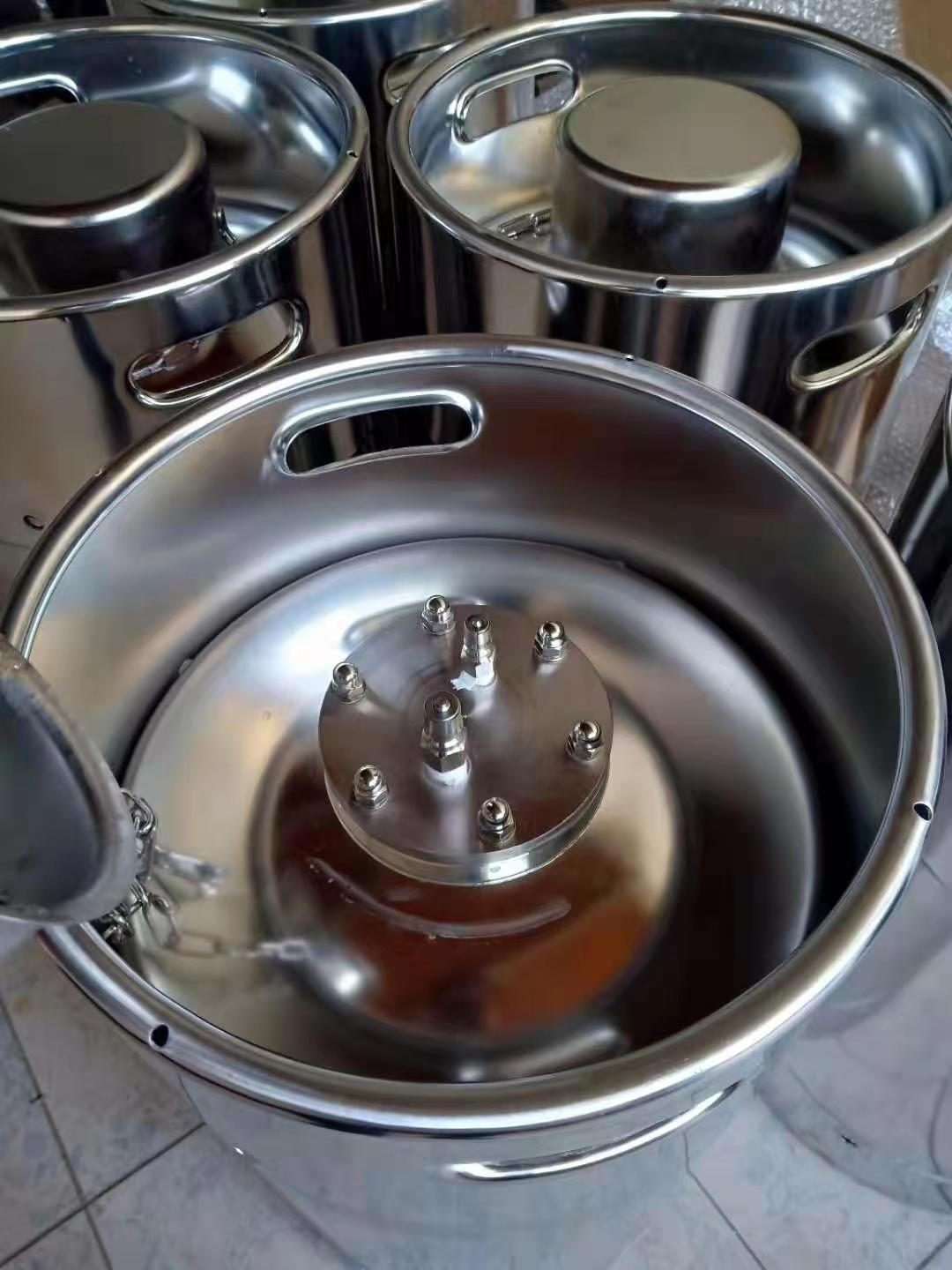
Handling boron tribromide requires strict precautions to maintain safety and chemical integrity. It must be stored in airtight containers made of compatible materials, such as glass or certain fluoropolymers, to prevent contact with moisture. Storage areas should be cool, dry, and well-ventilated, ideally under an inert atmosphere like nitrogen or argon to avoid hydrolysis. Since boron tribromide has a density of about 2.643 g/cm³ and a boiling point of 91.3 °C, it should be kept away from heat sources to prevent vapor buildup.
When working with boron tribromide solution or the neat liquid, always wear appropriate personal protective equipment (PPE), including chemical-resistant gloves, safety goggles, and lab coats. Work in fume hoods or closed systems to avoid inhaling vapors. Avoid any contact with water or protic solvents during handling to prevent violent reactions.
In case of skin or eye contact, immediately flush the affected area with plenty of water for at least 15 minutes while removing contaminated clothing. Seek medical attention promptly, as burns may be severe. If inhaled, move the person to fresh air and provide oxygen if breathing is difficult. Do not induce vomiting if ingested; instead, seek emergency medical help immediately.
Spills should be handled with extreme caution. Evacuate the area and ventilate it thoroughly. Neutralize small spills using dry sodium bicarbonate or calcium carbonate, avoiding water. Use appropriate protective gear during cleanup. Dispose of waste according to local hazardous material regulations.
Tip: Always store boron tribromide under inert gas and handle it in moisture-free environments to prevent hazardous hydrolysis and ensure workplace safety.
Boron tribromide is used in organic synthesis for dealkylation and demethylation, in pharmaceuticals for drug synthesis, and in semiconductors for doping and etching. Its strong Lewis acidity and reactivity make it valuable across industries. Future developments may enhance its applications and safety measures. Jinan Xinggao Chemical Technology Co., Ltd. offers high-quality boron tribromide, ensuring reliability and efficiency in various industrial processes, providing significant value to its clients.
A: Boron tribromide is used in organic synthesis primarily for dealkylation processes, where it cleaves alkyl groups from ethers, and for demethylation of aryl methyl ethers, aiding in the synthesis of phenolic compounds.
A: The boron tribromide formula, BBr₃, consists of a boron atom bonded to three bromine atoms, contributing to its strong Lewis acidity and high reactivity, especially with oxygen-containing compounds.
A: The boron tribromide density is approximately 2.643 g/cm³, making it denser than water and notable for its physical characteristics in various applications.
A: Handle boron tribromide under anhydrous conditions, store in airtight containers, and use PPE to prevent exposure to its corrosive and reactive nature.


