
+86-18668977520
+86-18668977520

Views: 0 Author: Site Editor Publish Time: 2025-09-26 Origin: Site


N,N'-Diisopropylcarbodiimide (DIC) is a crucial reagent in organic synthesis. Known for its ability to form amide and ester bonds, it is widely used in peptide bond formation. In this article, we will explore the mechanism behind DIC, its advantages, and how it compares to other reagents. You will also learn how DIC is utilized in various chemical processes.
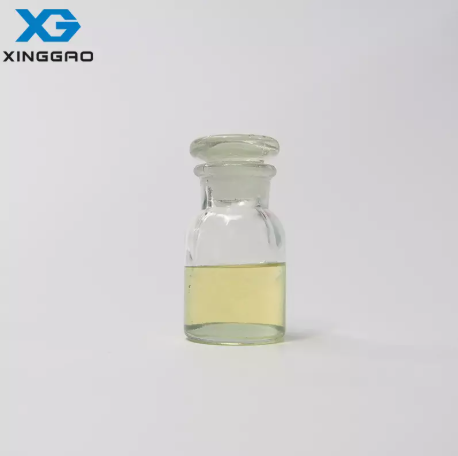
N,N'-Diisopropylcarbodiimide is an organic compound containing the carbodiimide group (–N=C=N–), which is highly reactive and effective in activating carboxylic acids. This reactivity makes it an ideal coupling agent for forming amide and ester bonds. The compound is a liquid under normal conditions, unlike other carbodiimides, such as dicyclohexylcarbodiimide (DCC), which is a solid. The liquid state of DIC allows it to be easily handled during reactions, which is one of its significant advantages over solid reagents like DCC. Additionally, the carbodiimide group in DIC is known for its ability to selectively activate carboxyl groups, enhancing the efficiency of coupling reactions.
The primary use of N,N'-Diisopropylcarbodiimide is in the formation of amide and ester bonds, particularly in the synthesis of peptides and the esterification of carboxylic acids. It is highly effective in peptide synthesis, where it helps form peptide bonds between amino acids. It is also widely used in esterification reactions, where it activates the carboxyl group of carboxylic acids, allowing them to react with alcohols to form ester compounds. The liquid state of DIC makes it easier to handle and manipulate during these reactions, ensuring high efficiency and reducing the risk of mistakes during the chemical process.
The byproduct of DIC reactions, N,N'-diisopropyl urea, is soluble in most organic solvents, which facilitates easier purification of the desired product. This property is particularly advantageous because it simplifies the post-reaction work-up process, making it easier to separate and remove unwanted byproducts, which in turn improves the overall yield and purity of the final product.
The carbodiimide group in N,N'-Diisopropylcarbodiimide is highly reactive, allowing it to efficiently activate carboxylic acids for further reactions. When used in peptide synthesis, DIC reacts with the carboxyl group of an amino acid, converting it into an acylisourea intermediate. This intermediate is highly reactive, making it ready to react with an amine group from another amino acid, leading to the formation of a peptide bond. This reaction is not only efficient but also selective, minimizing the formation of undesired side products and increasing the yield of the desired peptide.In esterification reactions, DIC also activates the carboxyl group of a carboxylic acid, enabling it to react with an alcohol to form an ester. The efficiency and selectivity of DIC in these reactions are what make it an essential tool in organic synthesis, particularly when working with sensitive compounds that may degrade under harsher reaction conditions.
One of the major benefits of DIC over similar reagents like DCC is its solubility. While DCC is a waxy solid that can be challenging to handle, DIC is a liquid at room temperature, which makes it much easier to work with. The liquid state of DIC allows for easier mixing and better control over reaction conditions, making it a preferred choice in many laboratory and industrial applications.Additionally, the byproducts of DIC reactions, such as N,N'-diisopropyl urea, are soluble in organic solvents. This solubility aids in the purification process by making it easier to separate the desired product from the byproducts. This property is particularly beneficial when working in synthetic chemistry, as it simplifies the work-up and purification stages, which can otherwise be time-consuming and tedious.
The mechanism of DIC in peptide synthesis begins with the activation of the carboxyl group of a carboxylic acid. DIC reacts with the carboxyl group, leading to the formation of an O-acylisourea intermediate. This intermediate is highly reactive, making it ready to react with an amine group from another amino acid. The formation of the peptide bond proceeds with the release of N,N'-diisopropyl urea as a byproduct.The O-acylisourea intermediate is a key step in the reaction because it increases the reactivity of the carboxyl group, allowing it to easily form a peptide bond with the amine group of the amino acid. This reaction is efficient, selective, and proceeds under mild conditions, making it ideal for peptide synthesis, particularly when working with sensitive or complex substrates.
Side reactions are a common challenge in peptide synthesis, as they can lead to the formation of unwanted byproducts, reducing the yield and purity of the final product. DIC minimizes these side reactions by selectively activating the carboxyl group of the amino acid, ensuring that only the desired reaction occurs. Compared to other reagents, such as DCC, DIC is less prone to forming side products like urethanes, which can complicate the purification process.The ability of DIC to minimize side reactions is one of the reasons it is preferred over other reagents in peptide synthesis. It ensures that the reaction proceeds cleanly, with fewer unwanted byproducts, leading to higher yields and more efficient purification of the final product.
DIC is widely used in esterification reactions, where it facilitates the conversion of carboxylic acids and alcohols into ester compounds. In these reactions, DIC activates the carboxyl group of a carboxylic acid, allowing it to react with an alcohol to form an ester. The reaction proceeds with the formation of an O-acylisourea intermediate, which then reacts with the alcohol to form the ester bond.DIC is particularly favored in esterification reactions because it operates under mild conditions, ensuring that the reaction is selective and efficient. It also leads to high yields of the desired ester product, making it an ideal choice for both laboratory and industrial applications.
One of the key advantages of DIC in esterification reactions is that it operates under mild conditions. This is crucial when working with sensitive compounds that may be degraded under harsher reaction conditions. DIC’s mildness ensures that esterification reactions are highly selective, leading to high yields and minimal degradation of the reagents or products.The mild reaction conditions also make DIC an ideal reagent for large-scale reactions, where temperature and reaction time must be carefully controlled to avoid unwanted side reactions. DIC’s efficiency and selectivity allow for the production of high-quality ester products under controlled conditions.
In the synthesis of natural products, DIC is invaluable for constructing ester and amide bonds, both of which are common in many natural compounds. DIC has been used to synthesize a wide range of bioactive natural products, including peptides, alkaloids, and other complex molecules. Its ability to efficiently form these bonds with high selectivity makes it a preferred choice for these challenging reactions.For example, DIC has been used in the synthesis of peptides and proteins, which are often challenging to produce due to the need for precise bond formation. By using DIC, chemists can achieve high yields and high purity, which are essential for the production of high-quality natural products.
DIC is also used in polymer synthesis, particularly in the production of polyesters. By activating carboxylic acids, DIC facilitates the formation of ester linkages in polymer chains. This is especially useful in the synthesis of specialty polymers, which require precise control over the reaction conditions. DIC’s ability to handle sensitive reagents and operate under mild conditions ensures that polymerization reactions are efficient and yield high-quality products.
While DCC is a widely used reagent in organic synthesis, DIC offers several advantages. First, DIC is a liquid at room temperature, making it easier to handle than DCC, which is a solid. Second, the byproduct of DIC reactions, N,N'-diisopropyl urea, is more soluble in organic solvents than the dicyclohexylurea produced by DCC. This solubility facilitates the purification process, making it easier to remove unwanted byproducts and obtain a high-purity final product.DIC’s liquid state and its ability to easily dissolve byproducts make it a preferred choice in many reactions, particularly in solid-phase peptide synthesis (SPPS), where ease of purification is critical.
| Property | DIC (N,N'-Diisopropylcarbodiimide) | DCC (Dicyclohexylcarbodiimide) |
|---|---|---|
| State | Liquid (easier to handle at room temperature) | Solid (waxy solid, more difficult to handle) |
| Byproduct | N,N'-Diisopropylurea (soluble in organic solvents) | Dicyclohexylurea (poor solubility) |
| Solubility | Soluble in most organic solvents | Poor solubility in organic solvents |
| Applications | Peptide synthesis, esterification, natural product synthesis | Peptide synthesis, esterification |
| Purity | Easier purification due to soluble byproducts | Difficult to purify due to hard-to-remove byproducts |
| Reaction Conditions | Mild, suitable for sensitive substrates | Requires higher temperatures |
DIC is highly versatile and compatible with a broad range of functional groups. It can be used to couple a variety of carboxylic acids, amines, and alcohols in different reactions, including peptide synthesis, esterification, and the formation of natural products. DIC’s efficiency in these reactions ensures high yields and high-purity products, making it an invaluable tool in organic synthesis.
N,N'-Diisopropylcarbodiimide is a powerful reagent with versatile applications in organic synthesis. Its high reactivity, solubility, and ease of handling make it ideal for peptide synthesis, esterification, and natural product synthesis. Compared to other reagents like DCC, DIC offers significant advantages, especially in efficiency and purification ease. As organic synthesis evolves, DIC remains an indispensable tool for chemists.For high-quality chemical products, Jinan Xinggao Chemical Technology Co., Ltd. offers reliable solutions. Their DIC product stands out for its exceptional performance and purity, ensuring superior results in organic synthesis processes.
A: N,N'-Diisopropylcarbodiimide (DIC) is a reactive coupling reagent used in organic synthesis, especially for forming amide and ester bonds.
A: DIC activates the carboxyl group of an amino acid, enabling it to form a peptide bond with another amino acid.
A: DIC is a liquid at room temperature and produces more easily removable byproducts, making it easier to handle.


