
+86-18668977520
+86-18668977520


Did you know that chemicals used in everyday products could pose serious risks to human health and the environment? REACH, a European Union regulation, tackles these concerns head-on.
In this article, we'll explore what REACH is, why it matters, and how it affects industries involved with chemical substances. You'll learn how REACH ensures chemical safety and promotes safer alternatives, both within the EU and beyond.
REACH is an acronym for Registration, Evaluation, Authorization, and Restriction of Chemicals. These four core processes form the backbone of the regulation:
● Registration: Chemical substances must be registered with the European Chemicals Agency (ECHA), providing data on their properties, uses, and any associated risks.
● Evaluation: ECHA and national authorities assess the data submitted to ensure substances are safe for use.
● Authorization: Substances of very high concern (SVHCs) require authorization before they can be used or marketed within the EU.
● Restriction: Chemicals that pose unacceptable risks to human health or the environment can be restricted or banned.
The REACH regulation was introduced by the European Union to modernize and improve the control of chemical substances. Its adoption in 2007 replaced more than 40 previous regulations. The goal was to streamline the process, enhance transparency, and ensure that all chemicals used in the EU were tested for safety. By establishing a single framework, REACH aimed to improve the safety of chemicals used in products such as household items, cleaning agents, industrial materials, and even textiles. Over time, additional phases were introduced, gradually enforcing tighter controls on hazardous substances.
The European Chemicals Agency (ECHA) is responsible for overseeing the implementation of REACH. It coordinates the registration process, evaluates chemical data, and ensures that companies comply with the regulation. ECHA also works with national authorities across EU member states to ensure consistency in the application of REACH and provides scientific and technical guidance to companies. Its role is crucial in shaping policies and ensuring that businesses comply with the rigorous requirements of REACH.
Component | Description |
Registration | Companies must register chemicals, providing safety data and risk assessments. |
Evaluation | Chemicals are evaluated for potential risks to human health and the environment. |
Authorization | Substances of very high concern need authorization before use or market placement. |
Restriction | REACH places restrictions on chemicals deemed too hazardous for use. |
Any business that manufactures, imports, or uses chemicals in the European Union needs to assess whether they are subject to REACH. This applies not only to manufacturers of raw chemicals but also to companies that incorporate chemicals into their products, such as electronics, textiles, and automotive parts. Importers of goods containing chemicals or those involved in re-exporting chemicals must also comply with REACH requirements. Additionally, downstream users—companies that use chemicals in their processes—must ensure they are using substances safely and have the necessary safety information from suppliers.
Under REACH, companies are responsible for gathering and submitting data regarding the chemicals they produce or import. This registration process requires businesses to compile extensive safety data, including potential risks and safe usage guidelines. For substances produced or imported in quantities of more than one ton per year, registration is mandatory. The registration dossier must include details such as chemical identity, toxicological information, environmental impact, and recommended safety measures. Companies are expected to update their dossiers regularly and ensure that any new data is added.
REACH has a global reach, impacting not just EU-based businesses but also non-EU manufacturers who export chemicals or products containing chemicals to the EU. Non-EU manufacturers must designate an "Only Representative" within the EU who can handle their REACH obligations. This representative is responsible for registering the substances on behalf of the non-EU entity and ensuring that all relevant safety data is provided to ECHA. Failure to comply can result in products being barred from the EU market, making compliance essential for global trade.
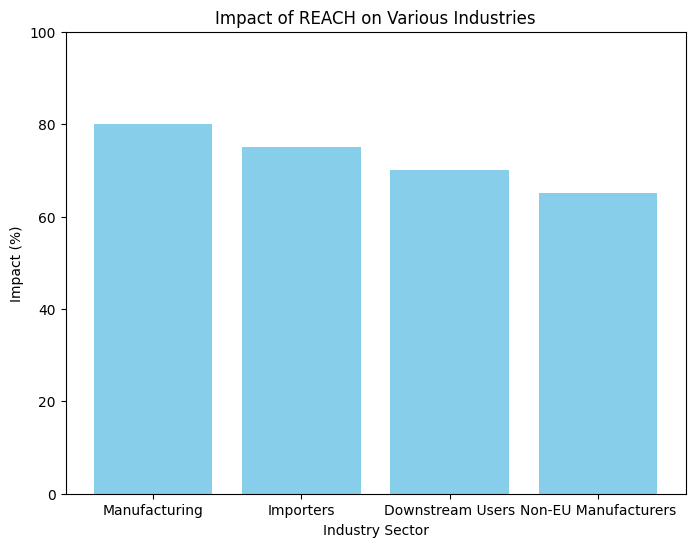
The process of registering chemicals under REACH can be complex and time-consuming. Manufacturers and importers must gather a range of data, including information about the chemical's properties, uses, environmental impact, and any potential risks to human health. The registration must be done through ECHA's online system, where all necessary documentation is submitted for review. Substances are categorized based on the amount produced or imported, with stricter requirements for chemicals produced in larger quantities. Deadlines for registration vary, with major phases having already passed for substances manufactured in significant volumes.
Once a chemical is registered, its safety and compliance with REACH are assessed. ECHA performs a completeness check on the registration dossiers, ensuring that all required data is provided. In cases where additional information is needed, companies are required to supply further details. Additionally, substances of concern may undergo a substance evaluation, which examines whether the substance poses risks to human health or the environment. If further testing is needed, companies may be asked to conduct additional studies to better understand the risks associated with the substance.
Certain substances are deemed to pose very high concerns (SVHCs), such as those that are carcinogenic, mutagenic, or toxic to reproduction. These substances require authorization before they can be used or placed on the market in the EU. Authorization applications involve detailed risk assessments, which must demonstrate that the substance can be used safely or that no suitable alternatives exist. Additionally, REACH allows for restrictions to be placed on hazardous chemicals, including outright bans on their manufacture, use, or sale in the EU. These restrictions are vital in protecting both human health and the environment.
Step | Description |
Registration | Collect and submit chemical safety data to ECHA. |
Risk Evaluation | Assess risks and submit safety assessments to ECHA for approval. |
Safety Measures | Implement risk management practices to ensure the safe use of chemicals. |
Compliance | Adhere to restrictions or authorizations for high-risk substances. |
One of REACH's primary goals is to safeguard human health by ensuring that chemicals used in various products do not pose significant risks. By requiring companies to submit detailed safety information, REACH helps identify harmful substances and enforce restrictions on their use. The regulation encourages safer alternatives, ensuring that only chemicals with acceptable risk profiles are allowed in consumer products, workplace environments, and industrial processes.
REACH also addresses environmental risks posed by chemicals. Many substances, particularly those that are persistent and bioaccumulative, can remain in ecosystems for long periods and harm wildlife. By restricting such chemicals, REACH helps reduce pollution and the long-term damage they may cause to ecosystems. The regulation also promotes research into alternatives that are less harmful to both the environment and human health, facilitating a move toward more sustainable chemical practices.
REACH encourages the substitution of hazardous chemicals with safer alternatives. The regulation emphasizes innovation in finding chemicals that perform the same function but with less harmful effects. Through authorizations and restrictions, REACH aims to phase out the most dangerous substances, replacing them with substances that are safer for both humans and the environment.
REACH compliance can be particularly challenging for small and medium-sized enterprises (SMEs) due to the administrative burden and associated costs. Gathering the necessary data for chemical registration, conducting safety assessments, and ensuring compliance with restrictions can be resource-intensive. However, SMEs can alleviate some of these challenges by utilizing support services provided by ECHA, industry associations, and compliance consultants.
Although REACH is an EU regulation, it has global implications for businesses worldwide. Non-EU companies exporting chemicals to the EU must comply with REACH requirements, including registration and safety documentation. This has led to the globalization of chemical safety standards, ensuring that chemicals entering the EU market are safe, regardless of where they are produced. As international markets increasingly adopt similar regulations, companies will need to remain vigilant and proactive in ensuring global compliance.
Businesses can streamline the REACH compliance process by adopting digital tools, collaborating with industry peers, and seeking guidance from experts. Using compliance software can simplify data management, automate reporting, and reduce errors. Additionally, joining substance information exchange forums (SIEFs) allows companies to share data and costs when registering the same substances, making the process more efficient.
In the automotive sector, companies have made significant strides in integrating REACH compliance into their supply chains. By working closely with suppliers and ensuring that all chemicals used in vehicles meet REACH requirements, automotive manufacturers can maintain compliance while promoting safer, more environmentally friendly products.
Chemical manufacturers face unique challenges under REACH, especially when it comes to managing substances that are restricted or require authorization. However, by staying informed about regulatory updates and investing in safer alternatives, these companies can continue to operate within the EU market while maintaining high standards of safety and environmental protection.
For consumer goods manufacturers, REACH has led to a transformation in product safety. From cosmetics to clothing, REACH ensures that chemicals used in everyday products are safe for consumers and the environment. By requiring comprehensive safety data and encouraging substitution, REACH has prompted significant changes in how chemicals are sourced and used in the consumer goods sector.
REACH continues to evolve, with updates and amendments regularly made to address emerging chemicals and risks. The regulation will continue to adapt to new scientific findings and technological advancements, ensuring that it remains effective in protecting human health and the environment.
Digital tools are playing an increasingly important role in helping businesses comply with REACH. From software that automates the registration process to data management systems that streamline reporting, technology is making REACH compliance more efficient and less burdensome for businesses.
The long-term vision of REACH is to promote sustainability by encouraging the use of safer chemicals and reducing environmental harm. As industries continue to innovate and improve their chemical safety practices, REACH will remain a crucial tool in fostering a safer, more sustainable future.
REACH is a vital regulation that governs chemical use within the European Union, ensuring safety for both human health and the environment. It requires businesses to register chemicals, assess risks, and restrict hazardous substances. As this regulation evolves, companies must stay compliant and embrace safer alternatives. Jinan Xinggao Chemical Technology Co., Ltd. is dedicated to providing high-quality chemical products that meet these standards, offering value through its commitment to safety and sustainability.
A: REACH stands for Registration, Evaluation, Authorization, and Restriction of Chemicals. It's a European Union regulation aimed at ensuring chemical safety in products used by humans and the environment.
A: REACH ensures that chemical substances are properly registered, evaluated for risks, and restricted if they pose hazards, improving overall chemical safety.
A: Manufacturers, importers, and users of chemicals within the EU must comply with REACH, ensuring that chemicals are safe for their intended use.
A: Chemical manufacturers must provide detailed safety information, register their substances, and follow guidelines to ensure their products do not pose risks to health or the environment.
A: Businesses must register chemicals, assess risks, ensure safe use, and comply with restrictions or authorization for hazardous chemicals.
A: By regulating chemicals and promoting safer alternatives, REACH helps protect human health and reduce environmental harm caused by hazardous substances.


