
+86-18668977520
+86-18668977520

Views: 0 Author: Site Editor Publish Time: 2026-01-13 Origin: Site


Are you concerned about the ingredients in your skincare products? As more consumers demand safer, natural, and sustainable options, the skincare industry is evolving. In this article, we'll explore how ingredients are changing and the role of technology in this shift.
You'll discover how the use of natural ingredients is shaping the future of skincare, along with the innovations driving safer formulations.
The demand for natural skincare products has surged in recent years, driven by increasing concerns over the potential dangers of synthetic chemicals in cosmetics. Ingredients like parabens, sulfates, and synthetic fragrances, which were once common in skincare formulations, are now under intense scrutiny. Consumers are more informed than ever, seeking out products that are not only effective but also free from harsh chemicals. This shift is shaping the future of the skincare industry, with natural ingredients emerging as the go-to choice for many consumers.
The appeal of natural ingredients lies in their safety profile. Plant-based oils, botanical extracts, and other naturally derived compounds tend to be gentler on the skin, making them suitable for all skin types, including sensitive skin. As the public becomes more aware of the potential long-term effects of synthetic chemicals, there is a growing preference for products that utilize ingredients from nature's own pharmacy.
As consumer awareness grows, so does regulatory pressure on the beauty industry to prioritize safety. Governments and regulatory bodies across the globe are taking steps to ensure that cosmetic products meet higher safety standards. In many countries, there are now stricter regulations governing the use of certain ingredients that have been linked to adverse health effects. These regulations not only mandate the removal of harmful ingredients but also encourage the use of safer, more sustainable alternatives.
The impact of these regulations is evident in the reformulation efforts of many skincare brands, which are increasingly adopting transparent labeling practices. Consumers now expect companies to disclose every ingredient used in their products, enabling them to make informed decisions based on their personal health concerns and values. This demand for ingredient transparency is likely to continue to grow as more people seek products that align with their commitment to personal health and environmental responsibility.
The 'clean beauty' movement has been instrumental in reshaping the skincare industry. Consumers are increasingly gravitating towards products that are free from certain ingredients, such as parabens, phthalates, and synthetic fragrances. This trend has spurred a wave of innovation, with skincare brands focusing on formulations that use safer, naturally sourced ingredients while eliminating potentially harmful substances.
While "clean beauty" is often used as a marketing term, it has become a powerful force in pushing the industry towards greater ingredient transparency and safety. Labels that highlight products as "free from" harmful chemicals have become highly popular, although it's important to note that not all clean beauty labels are created equal. Consumers are advised to be cautious and informed, as some "free-from" claims may not always be as transparent or regulated as they should be.
Ingredient Type | Common Ingredients | Benefits | Drawbacks |
Natural | Plant oils, botanical extracts | Gentler on skin, suitable for sensitive skin, fewer chemicals | May have a shorter shelf life, higher cost |
Synthetic | Parabens, sulfates, synthetic fragrances | Cost-effective, longer shelf life | Can cause irritation, linked to health concerns |
One of the most exciting developments in skincare ingredient evolution is the rise of biotechnology. Biotechnology allows for the development of effective skincare ingredients derived from natural sources, such as plants, without the environmental impact associated with traditional extraction methods. Through biotechnology, companies can harness the power of nature's raw materials, enhancing their benefits while making the process more sustainable.
Biotech-derived ingredients such as hyaluronic acid, a well-known hydrating agent, and squalane, a moisturizer derived from plant sources, are examples of how technology is advancing the use of natural ingredients. These ingredients offer the benefits of traditional plant-based compounds but with more consistent potency and sustainability. Biotechnology also enables the creation of ingredients that mimic natural compounds, improving their availability and effectiveness.
Another area of significant innovation is the use of plant-based and fungi-derived ingredients in skincare formulations. These natural ingredients, which include oils, extracts, and bioactive compounds, have been used for centuries in traditional beauty treatments. Today, scientific advancements have allowed these ingredients to be used more effectively and sustainably in modern skincare.
For example, plant oils such as jojoba oil and argan oil are prized for their ability to hydrate and nourish the skin. Fungi, too, are gaining attention for their powerful antioxidant and anti-inflammatory properties. Mushrooms such as reishi and shiitake are now featured in many skincare products, providing a natural source of antioxidants that help to protect the skin from environmental damage and promote a healthy, glowing complexion.
As the demand for natural skincare products grows, there has also been a rise in the use of natural preservatives. Preservatives are essential in ensuring that skincare products remain safe and effective for use over time, but many synthetic preservatives have raised concerns due to their potential to cause irritation or disrupt hormones. As a result, many skincare brands are turning to plant-based preservatives, which are gentler on the skin and often have additional skincare benefits.
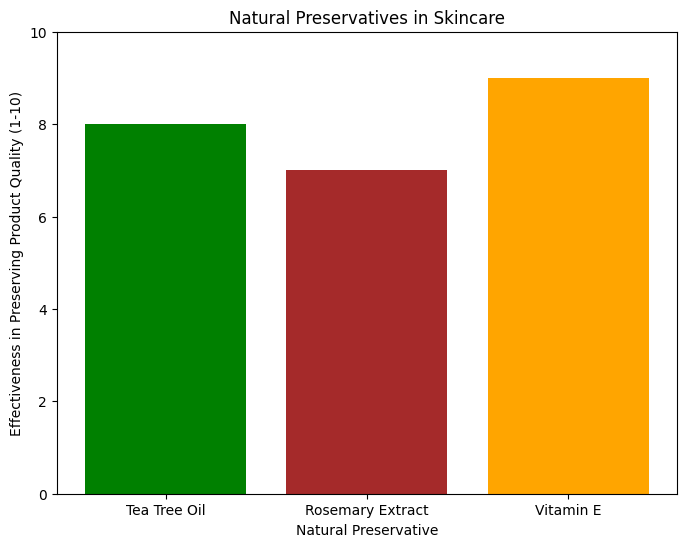
Natural preservatives, such as plant extracts like tea tree oil and rosemary extract, offer a safer alternative to synthetic preservatives while still providing the necessary antimicrobial properties. These preservatives not only help to maintain the integrity of the products but also contribute to the overall efficacy of the skincare formulations.
Natural Preservative | Source | Function in Skincare | Benefits |
Tea Tree Oil | Melaleuca alternifolia (plant) | Antimicrobial, soothing | Helps prevent bacterial growth, calming properties |
Rosemary Extract | Rosmarinus officinalis (plant) | Antioxidant, antimicrobial | Protects from environmental damage, prevents oxidation |
Vitamin E | Vegetable oils, nuts | Antioxidant | Moisturizes skin, prevents aging, soothes inflammation |
For individuals with sensitive skin, the importance of gentle, non-irritating ingredients cannot be overstated. Many traditional skincare products contain harsh chemicals that can lead to irritation, redness, or allergic reactions. As a result, there is a growing demand for skincare products that feature soothing ingredients, such as plant-based oils, mild surfactants, and probiotics.
These gentle ingredients help to maintain the skin's natural barrier while providing the necessary hydration and nourishment. For instance, ingredients like aloe vera and chamomile have long been known for their calming properties, making them ideal choices for sensitive skin formulations.
Consumer feedback has become an integral part of the skincare industry's approach to product development. Social media, online reviews, and direct feedback from customers are increasingly driving reformulation efforts. As consumers share their experiences with various ingredients, brands are becoming more aware of the need to prioritize ingredient safety and efficacy in their products.
This feedback loop has led to the removal of controversial ingredients and the adoption of safer alternatives in skincare products. For example, as consumers voiced concerns about the potential risks of certain preservatives and fragrances, many skincare brands responded by reformulating their products to exclude these ingredients.
Sustainability is an important consideration for both consumers and skincare brands. As the demand for natural ingredients grows, so does the need for responsible sourcing practices. Sustainable ingredient sourcing ensures that the raw materials used in skincare formulations are harvested in a way that minimizes environmental impact and supports fair labor practices.
Examples of sustainable ingredients include squalane derived from renewable plant sources and eco-friendly emulsifiers that are biodegradable and non-toxic to marine life. As consumers become more environmentally conscious, brands that prioritize sustainability in their ingredient sourcing will be better positioned to meet the demands of the market.
Packaging plays a significant role in the overall sustainability of skincare products. Many traditional skincare brands rely on plastic packaging, which contributes to the growing issue of plastic pollution. In response, several skincare companies are adopting more sustainable packaging solutions, such as recyclable, biodegradable, or refillable packaging.
These innovations help reduce the environmental footprint of skincare products, making them more eco-friendly and appealing to consumers who are committed to sustainability. Refillable containers, for example, allow consumers to reuse packaging, reducing the need for single-use plastic.
Green chemistry is an emerging field that focuses on developing safer, more sustainable alternatives to traditional chemical processes. In skincare, this means using renewable resources, minimizing waste, and reducing the environmental impact of production processes. Green chemistry techniques, such as biocatalysis and solvent-free extraction, are helping to create more sustainable skincare formulations without compromising on efficacy.
These advancements are paving the way for the future of skincare, where products are not only safer and more effective but also gentler on the planet.
Sustainable Ingredient | Source | Benefit | Environmental Impact |
Squalane | Olive oil, sugarcane | Moisturizes skin, enhances elasticity | Biodegradable, renewable source |
Eco-friendly Emulsifiers | Plant-based sources | Stabilizes formulas, enhances texture | Non-toxic, biodegradable, less harmful to marine life |
Jojoba Oil | Jojoba plant | Hydrates and nourishes skin | Sourced without harming the plant, sustainable farming practices |
Technology has revolutionized the way skincare brands extract ingredients from natural sources. Modern extraction techniques, such as supercritical CO2 extraction and cold-pressing, allow for the efficient extraction of bioactive compounds from plants and fungi without the use of harmful solvents or high temperatures. This ensures that the ingredients retain their potency and purity, offering consumers the maximum benefits.
These advancements in extraction technology are also helping to make natural ingredients more affordable and accessible, as they reduce the need for large-scale farming and allow for the sustainable production of high-quality skincare ingredients.
As technology continues to evolve, so does the ability to personalize skincare. Advances in artificial intelligence and data-driven approaches allow consumers to receive skincare recommendations tailored to their unique skin concerns. By analyzing factors such as skin type, age, and environmental influences, these technologies can help consumers select the most suitable products for their individual needs.
This level of customization has the potential to improve the effectiveness of skincare routines, as consumers can choose products with ingredients that are best suited for their skin's specific requirements.
The future of skincare ingredients is bright, with ongoing research and development promising new, safer, and more sustainable options. In the coming years, we can expect to see even more innovative ingredients, such as those derived from biotechnology and plant-based sources, that deliver targeted results without compromising safety.
As consumers continue to prioritize ingredient transparency and sustainability, skincare brands will need to stay ahead of these trends, investing in new technologies and ingredient innovations to meet the evolving demands of the market.
The skincare industry is evolving due to the growing demand for safer, natural, and sustainable ingredients. Biotechnology and advanced technology are playing a key role in developing eco-friendly skincare solutions. Companies like Jinan Xinggao Ingredient Technology Co., Ltd. are leading the charge by offering innovative ingredients that balance nature and science, providing products that benefit both the skin and the environment.
A: The evolution is driven by consumer demand for safer, natural, and sustainable ingredients. As awareness of harmful chemicals grows, more people seek products with gentler, effective ingredients that are better for both skin and the environment.
A: Natural ingredients are becoming more popular as they offer safer alternatives to synthetic chemicals. They are often gentler on the skin, making them ideal for sensitive skin types while also promoting sustainability.
A: Biotechnology enables the creation of effective, eco-friendly ingredients by using natural sources. This helps develop sustainable skincare solutions, such as plant-derived moisturizers and bio-based compounds with consistent potency.
A: Plant-based ingredients are gentler on the skin and have nourishing properties. They also tend to be more sustainable, making them an ideal choice for consumers seeking eco-friendly skincare options.
A: Stricter regulations on ingredients like parabens and sulfates are encouraging skincare brands to prioritize safer, more natural formulations. These regulations ensure products meet higher safety standards for consumers.
A: Consumer feedback is crucial in shaping the reformulation of skincare products. As consumers voice concerns about ingredient safety, brands are adapting by removing harmful substances and introducing safer, more effective alternatives.


