
+86-18668977520
+86-18668977520

Views: 0 Author: Site Editor Publish Time: 2026-07-20 Origin: Site


In high-precision chemical synthesis, raw material purity dictates the final yield. Degradation of sensitive reagents during transit or storage introduces unacceptable variability into manufacturing pipelines. When handling aminoguanidine bicarbonate, operators face specific environmental vulnerabilities. This compound is highly susceptible to thermal decomposition and moisture-induced degradation.
Improper drying at the manufacturing stage, substandard export packaging, or inadequate facility storage leads to severe caking, loss of assay, and compromised downstream reactions. Mitigating these risks requires a rigorous approach to logistics and environmental control. You cannot rely on standard dry goods handling procedures. This guide details the chemical handling realities, facility storage protocols, and export shipping standards required to maintain the integrity of this material from the supplier's facility directly to your reactor.
Thermal and Hydrolytic Sensitivity: Aminoguanidine bicarbonate decomposes when exposed to excessive heat or hot water; strict temperature and moisture controls are non-negotiable.
Packaging is the Primary Defense: Viable long-term storage and international transit require tightly closed, original containers with verified moisture barrier liners.
Supplier Drying Processes Matter: Residual moisture from incomplete drying of the wet cake during manufacturing accelerates degradation during transit.
Export Compliance: Sourcing aminoguanidine bicarbonate for export requires alignment on Safety Data Sheet (SDS) documentation, Certificate of Analysis (CoA) verification, and climate-aware freight routing.
To prevent quality loss, procurement and chemical handling teams must understand the specific environmental triggers that degrade the compound. Recognizing these vulnerabilities allows facility managers to design effective storage and logistics strategies that prevent material loss before it occurs.
Aminoguanidine bicarbonate exhibits distinct thermal instability. When exposed to elevated temperatures, the compound begins to break down. This compromises its chemical structure and renders it useless for precise synthetic applications. Thermal sensitivity dictates strict temperature controls during both storage and transit. Warehouse managers must monitor ambient temperatures continuously, ensuring the storage environment remains consistently cool.
The compound decomposes rapidly in hot water. This presents a specific processing reality. Recrystallization from hot aqueous solutions is strictly avoided in manufacturing. Any exposure to hot, humid environments or direct heat sources triggers irreversible decomposition. Operators must keep the material away from steam lines, uninsulated heating ducts, and direct sunlight.
Ambient humidity presents a significant threat to material integrity. The compound is hygroscopic. It absorbs moisture directly from the air. This moisture uptake leads to severe caking, transforming a free-flowing powder into solid, unusable blocks. Caked material causes uneven dispersion during synthesis. This leads to erratic reaction rates, equipment blockages, and lower yields.
The risk of caking compounds if the supplier utilizes substandard drying processes. If residual moisture remains from the initial wet cake stage of manufacturing, internal degradation accelerates. This happens long before the product leaves the supplier's facility. Proper drying is a fundamental prerequisite for stability. Procurement teams must verify the moisture content on the Certificate of Analysis before accepting any batch.
Degradation Triggers and Physical Impacts | ||
Environmental Trigger | Chemical/Physical Reaction | Impact on Manufacturing |
|---|---|---|
Elevated Ambient Heat (>30°C) | Gradual thermal decomposition | Loss of assay, inconsistent reaction yields |
Direct Contact with Hot Water | Rapid, irreversible breakdown | Total batch failure, unusable reagent |
High Ambient Humidity | Moisture absorption (hygroscopic) | Severe caking, poor dispersion in reactors |
Internal Residual Moisture | Accelerated internal degradation | Shortened shelf life, premature caking in drums |
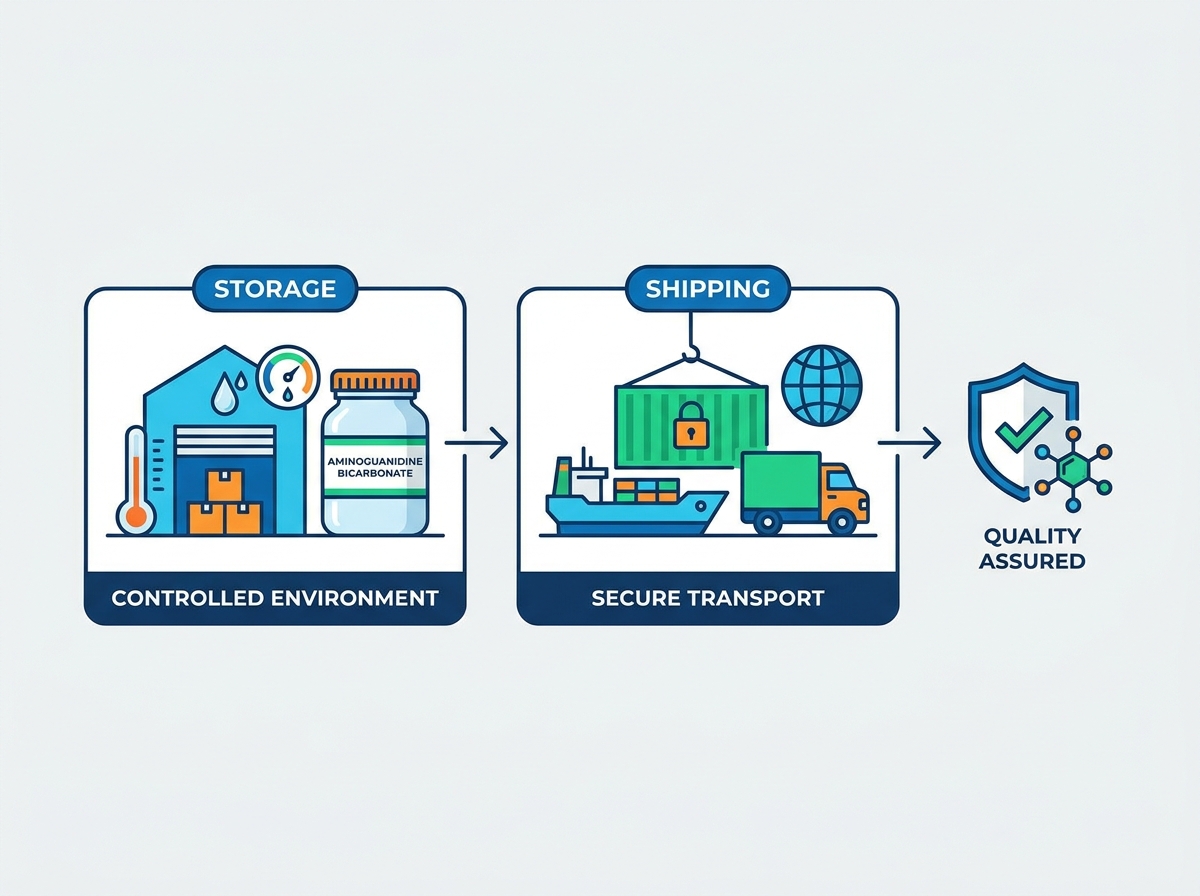
Establishing internal warehouse protocols that align with SDS mandates is essential for chemical preservation. A controlled environment prevents the slow degradation that ruins batch consistency. Facility managers must implement strict environmental controls and segregation policies.
Long-term stability requires a cool, dry environment. Baseline temperatures should remain at ambient or cooler levels. You must strictly avoid proximity to radiators, direct sunlight, or industrial heat sources. Humidity controls are equally vital. The storage area must be well-ventilated and dry to prevent moisture absorption. Implement continuous environmental monitoring using calibrated data loggers to track temperature and humidity fluctuations.
Chemical segregation prevents catastrophic accidents. Keep the compound away from specific incompatible materials. Strong acids, strong bases, and oxidizing agents pose severe risks. Accidental contact with these substances triggers dangerous reactions or rapid decomposition. Enforce strict segregation protocols within the storage facility. Use dedicated storage bays and clear signage to prevent cross-contamination.
The chemical must remain in its original, tightly closed containers until immediately before use. Transferring the material to secondary containers increases the risk of moisture exposure and contamination. Once a drum is opened, operators must reseal the internal liners completely to maintain the moisture barrier.
When evaluating bulk storage options, facility managers must weigh the benefits of different container types. Fiber drums equipped with heavy-duty polyethylene (PE) liners offer excellent moisture barriers, provided the liners remain sealed. High-density plastic drums provide robust physical protection. They must still utilize internal liners to guarantee a moisture-free microclimate. Inspect all incoming drums for physical damage that could compromise the seal.
Standard safety procedures, dictated by SDS guidelines, govern all handling activities. The primary goals are avoiding dust inhalation and preventing skin or eye contact. Facility managers must enforce these protocols rigorously.
Required personal protective equipment (PPE) for warehouse staff and lab technicians includes face protection, protective gloves, and respiratory defense. Operators must wear nitrile or rubber gloves and safety goggles. In poorly ventilated areas or during bulk transfer operations, NIOSH-approved dust masks or respirators are mandatory.
In the event of a spill, safe handling procedures require immediate containment. Follow these steps:
Isolate the spill area and restrict access to unprotected personnel.
Put on all required PPE, including respiratory protection.
Sweep up the powder gently to avoid creating dust clouds. Do not use compressed air.
Place the spilled material into tightly sealed, dedicated containers.
Label the disposal containers clearly to prevent cross-contamination with other facility waste.
Moving bulk quantities across international borders introduces significant logistical challenges. Assessing these requirements ensures the chemical assay remains uncompromised upon arrival. You must account for extended transit times, varying climates, and rough freight handling.
When preparing aminoguanidine bicarbonate for export, standard domestic packaging fails. Multi-layer packaging strategies are mandatory. This involves double-lined polyethylene bags securely tied and housed inside UN-rated drums. This dual-layer approach provides redundancy against maritime humidity and condensation inside shipping containers.
Palletization techniques must account for rough freight handling at ports and distribution centers. Shrink-wrapping entire pallets tightly and utilizing rigid edge protectors prevents physical container damage. A breached drum compromises the moisture barrier, leading to immediate material degradation during transit. Ensure pallets are heat-treated (ISPM 15 compliant) for international shipping.
Logistics teams must analyze the cost-to-benefit ratio of utilizing temperature-controlled containers (reefers) versus standard dry shipping containers. Reefers guarantee thermal stability, maintaining a set temperature regardless of external conditions. However, they significantly increase freight costs.
Standard shipping carries inherent risks, particularly through high-humidity or high-temperature equatorial transit routes. If standard dry containers are used, the integrity of the internal packaging becomes the sole defense against thermal and hydrolytic degradation. Routing decisions must factor in seasonal climate variations. Shipping during peak summer months through equatorial zones in dry containers often results in degraded material upon arrival.
Freight Option Comparison | |||
Freight Type | Thermal Control | Moisture Protection | Risk Profile for Export |
|---|---|---|---|
Standard Dry Container | None (subject to ambient swings) | Relies entirely on drum/liner integrity | High risk during summer or equatorial routes |
Temperature-Controlled (Reefer) | Active cooling/heating | Controlled internal humidity | Low risk, preserves assay, higher freight cost |
LCL (Less than Container Load) | None | High risk of cross-contamination | Not recommended for sensitive chemical reagents |
Customs delays expose cargo to uncontrolled port environments. Ports often lack climate-controlled storage for delayed containers. Preventing these delays requires flawless export and import documentation. Discrepancies between documents trigger inspections and holds.
Ensure alignment across all paperwork. The commercial invoice, packing list, Certificate of Analysis (CoA), and globally harmonized Safety Data Sheet (SDS) must match exactly. Verify HS codes and chemical names before the shipment leaves the origin facility. Swift customs clearance minimizes the time the shipment spends in vulnerable transit hubs.
Auditing a chemical supplier's operational standards before finalizing a bulk purchase agreement prevents downstream failures. The supplier's manufacturing and packaging processes directly impact the material's survival during transit. Do not base procurement decisions solely on the lowest price per kilogram.
Procurement teams must question the supplier's manufacturing drying process. Understanding how they transition the chemical from a wet cake to a stable dry powder reveals their operational maturity. Incomplete drying guarantees future caking and accelerated degradation. Ask for specific moisture content limits in their product specifications.
Require pre-shipment CoAs to verify baseline purity and moisture content before transit begins. This document serves as the baseline for post-transit quality checks. If the pre-shipment moisture content is near the upper acceptable limit, the risk of caking during a long ocean transit increases significantly.
Establishing a standardized intake workflow for arriving shipments mitigates implementation risks. Do not move uninspected drums directly into the active warehouse inventory. Physical inspection criteria must include checking for compromised seals, drum damage, and any signs of moisture ingress or condensation on the outer packaging.
Immediate sampling and analytical testing upon arrival verify that the reduction state and purity match the pre-shipment CoA. Implement a strict receiving protocol:
Inspect the shipping container for structural damage or water leaks before unloading.
Verify the integrity of every drum, checking tamper-evident seals and locking rings.
Quarantine the shipment in a dry, temperature-controlled staging area.
Extract samples using clean, dry equipment to prevent introducing moisture.
Perform a quick-verification test by dissolving a sample in a 10% solution of sodium hydroxide (NaOH) to observe reaction properties and verify material integrity.
Maintaining the purity of this sensitive compound depends entirely on controlling heat and moisture through rigorous packaging and environmental management. Any lapse in these controls results in compromised material, caking, and failed synthetic reactions.
Take these actionable next steps to secure your supply chain:
Request detailed packaging specifications, a current SDS, and a sample CoA from prospective suppliers before issuing a purchase order.
Initiate a small-scale trial shipment to audit the supplier's logistics execution and packaging durability.
Implement strict receiving protocols, including the NaOH solution test, to verify post-transit material stability before releasing the batch to production.
Install calibrated temperature and humidity data loggers in your designated chemical storage bays.
A: Store the compound in cool, ambient temperatures. Avoid direct sunlight, radiators, or any industrial heat sources to prevent thermal decomposition and maintain the chemical assay.
A: The chemical exhibits severe thermal instability in hot aqueous environments. Exposure to hot water causes rapid, irreversible decomposition, making hot water recrystallization unviable during processing.
A: Export shipping requires tightly closed, original containers utilizing double-lined polyethylene moisture-barrier bags securely sealed inside durable UN-rated outer drums to protect against maritime humidity.
A: Incomplete drying of the wet cake during manufacturing leaves trapped residual moisture. This accelerates hydrolytic degradation, leads to severe caking, and drastically shortens the effective shelf life.
A: Strictly segregate the compound from strong acids, strong bases, and oxidizing agents. Contact with these incompatible materials causes unwanted chemical reactions or rapid decomposition.
A: Yes. Evaluate the reduction state or check for decomposition products by dissolving a small sample in a 10% sodium hydroxide (NaOH) solution and observing the resulting reaction properties.


